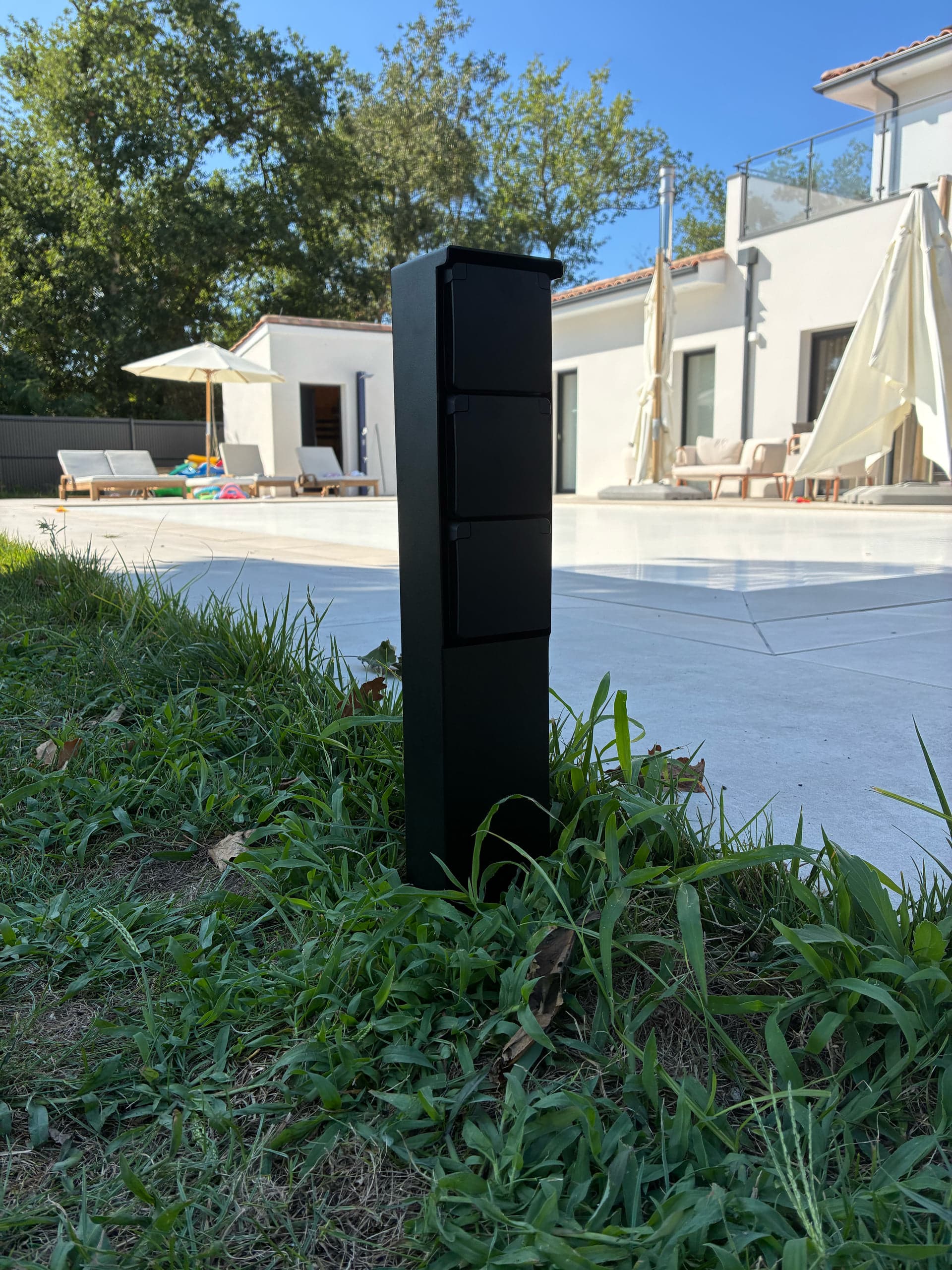
A dedicated supply for a submersible well pump in Lugos, an outdoor socket and two three-socket garden posts to serve the garden lighting, including trenching and reinstating the lawn.
Outdoor electrical work at a private home in Lugos, built around two needs: powering a submersible pump in the well for garden irrigation, and having sockets spread around the garden for outdoor lighting.
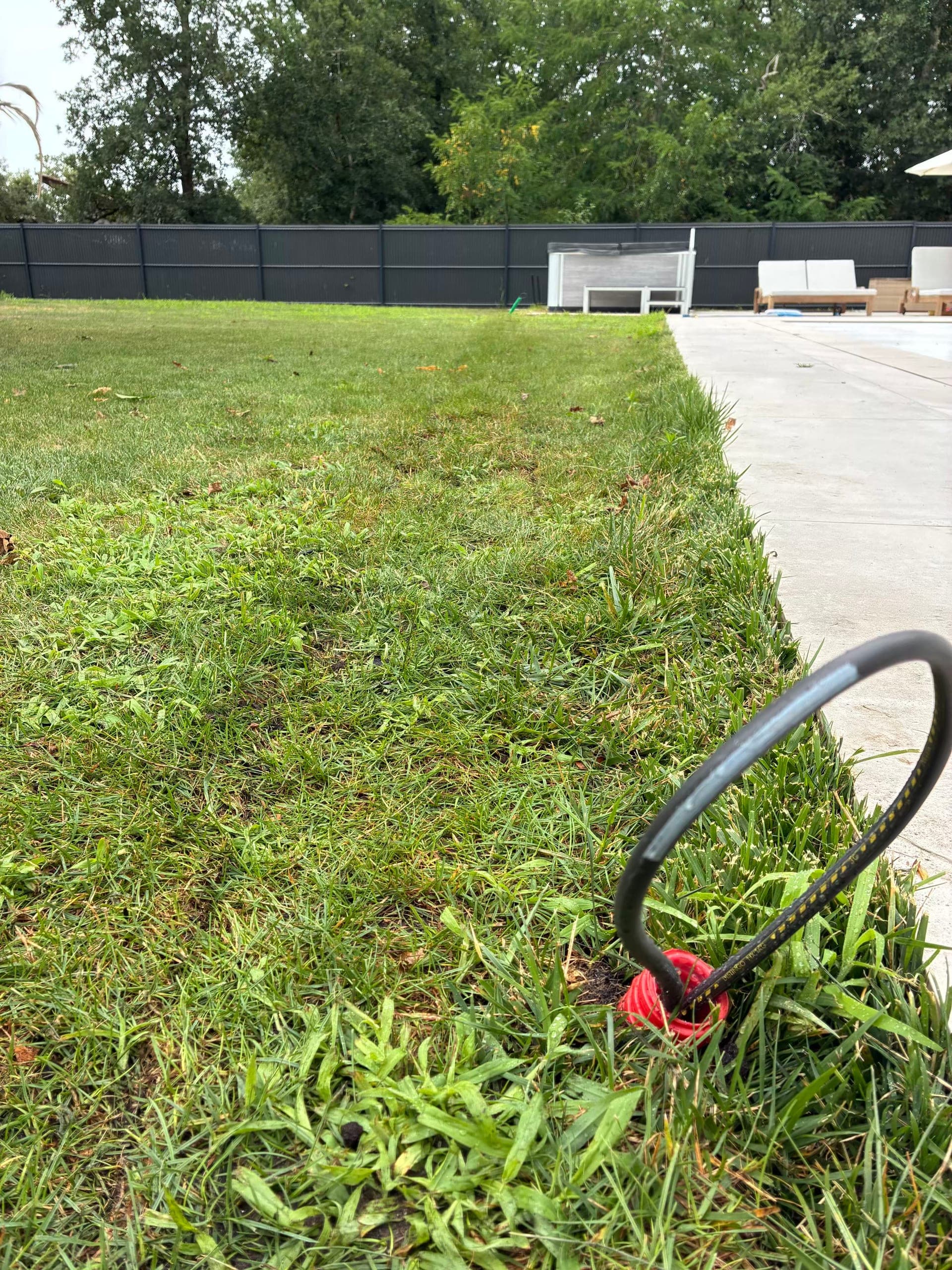
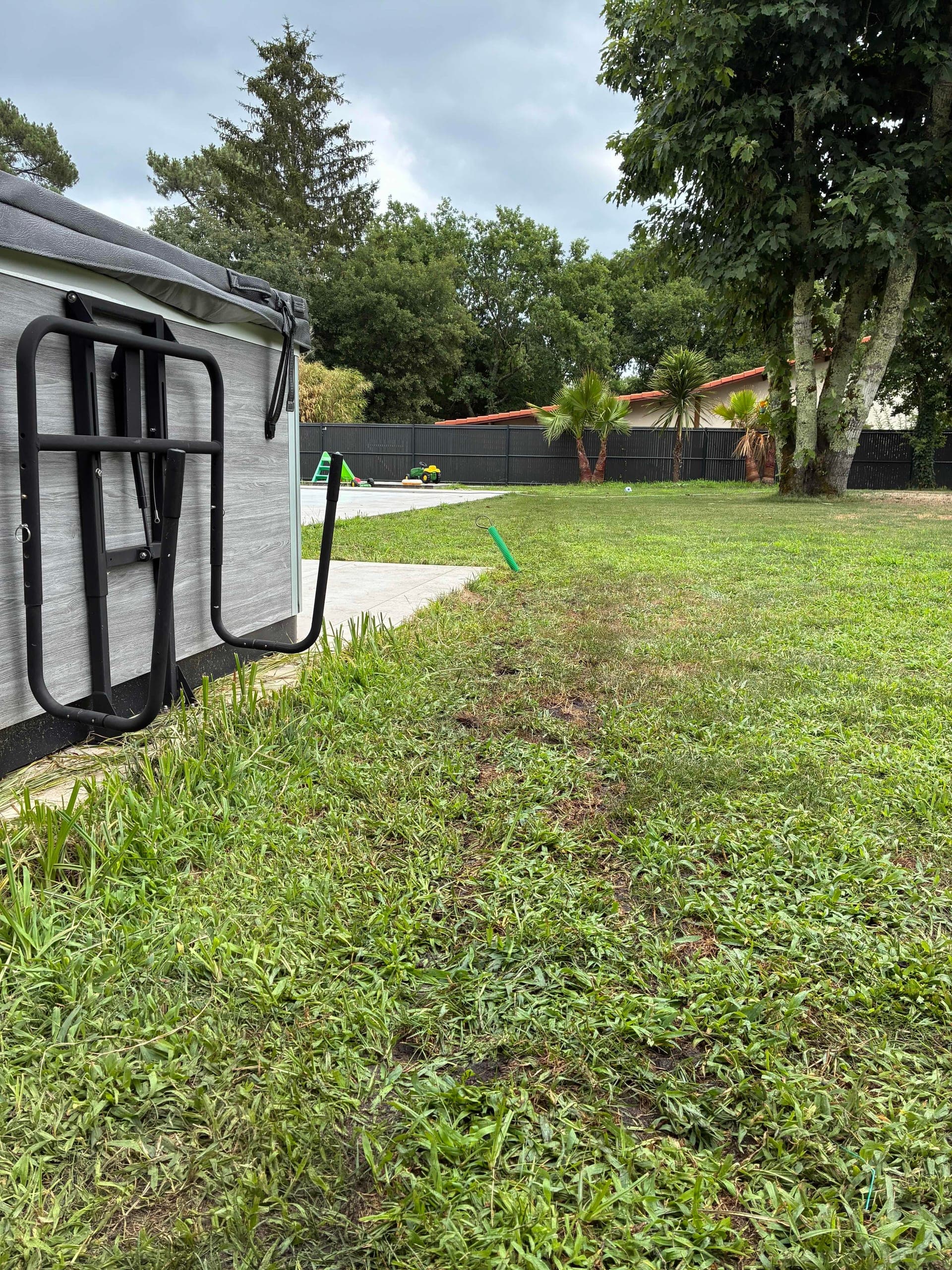
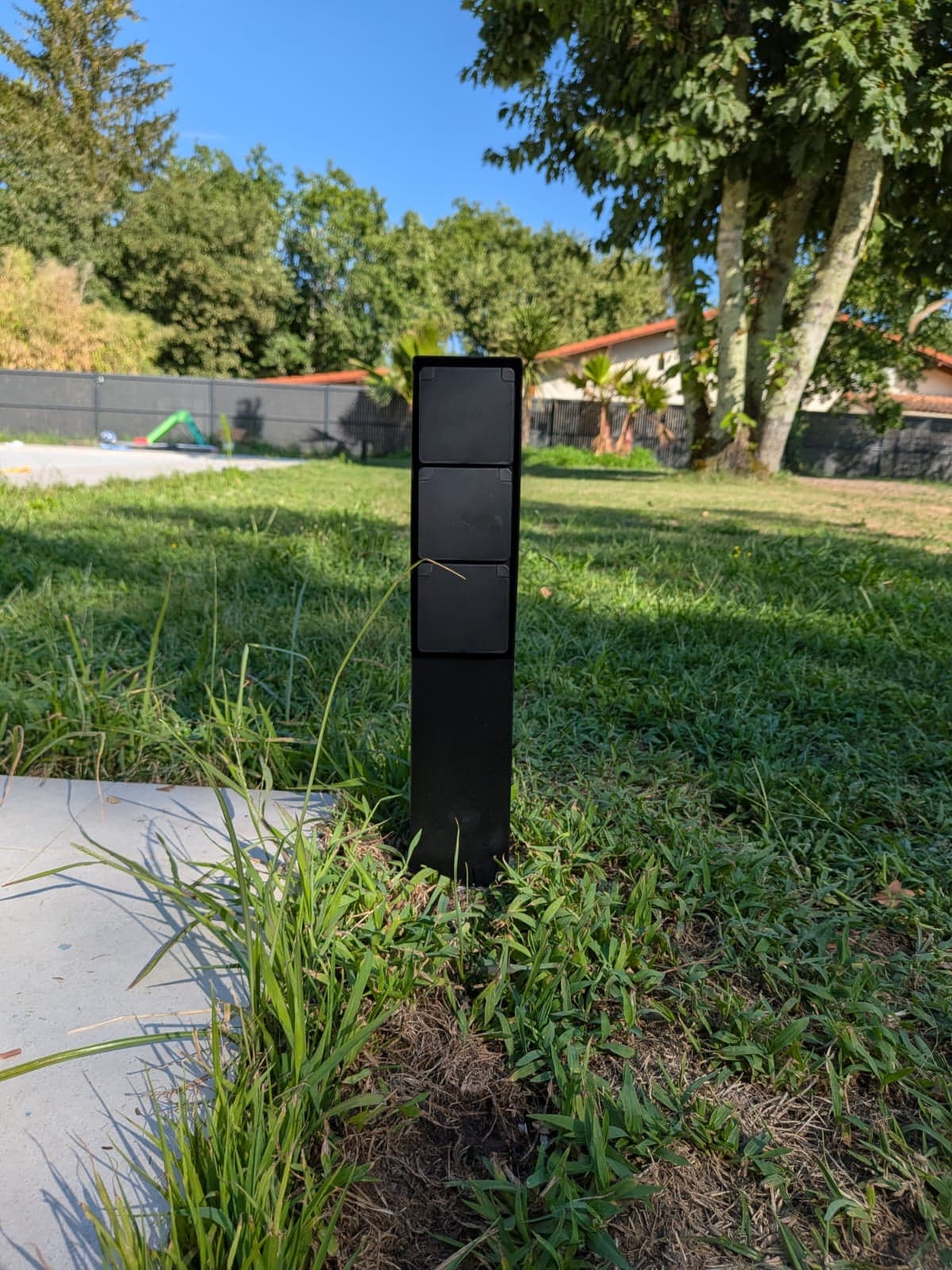
We fitted an outdoor socket on the wall, ran a dedicated supply for the pump, and pulled in the cabling for two garden posts with three sockets each. The customer chose black Niko spike-mounted posts, splashproof and earthed. The spike pushes straight into the lawn, right at the cable tail: no concrete base, no masonry to make good, and the post can be moved if the garden layout changes. Each post puts three sockets in one place, which saves running extension leads across the grass. Both have since been fitted onto the tails left in place — one at the edge of the pool terrace, the other further out in the garden.
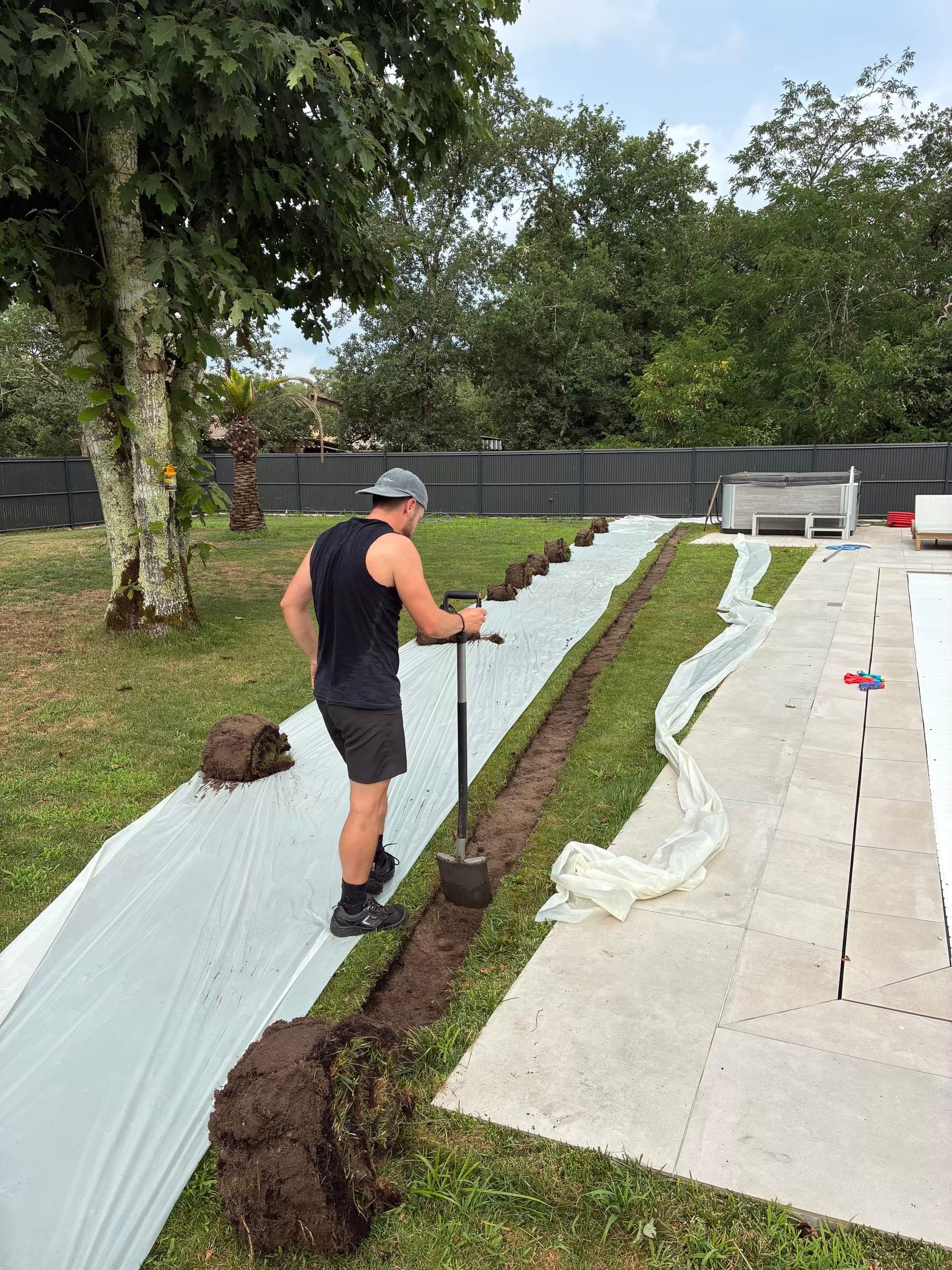
Getting power out to those points meant a trench along the terrace. The turf was cut and lifted onto a sheet before digging, then put back once the ducting was in and the trench backfilled — the lawn knits together again in a few weeks, with no need to reseed.
What we did
- Turf cut and lifted onto a sheet, so it could be put back exactly as it was
- A trench excavated along the terrace
- Ducting laid and the outdoor supplies pulled through
- Backfilling, compacting and relaying of the turf
- A weatherproof outdoor socket fitted on the wall
- A dedicated supply run for the submersible well pump
- Protection for the pump circuit at the board, sized for a motor load
- Two spike-mounted Niko garden posts with three sockets each fitted onto the cable tails left in place
- Connections made in equipment rated for permanent outdoor exposure
- New circuits labelled at the board
- Function testing, including starting and stopping the pump
What outdoor wiring demands
Outdoors, two constraints change everything compared with working inside.
The first is weatherproofing. A socket exposed to rain needs equipment with an IP rating built for it, with downward-facing cable entries and gasketed covers. Indoor equipment mounted outside lasts a year or two, then the damp does its work inside the enclosure.
The second is motor starting. A submersible pump is not a resistive load: it draws a current well above its rated figure at the moment it starts. The protective device and the conductor size are calculated on that peak and on the length of the run — otherwise you trip out every time it starts, or the cable runs hot. A dedicated circuit also stops a fault on the pump from taking the garden lighting down with it.
Planning outdoor electrical work in the Val de l'Eyre? Request a free quote.