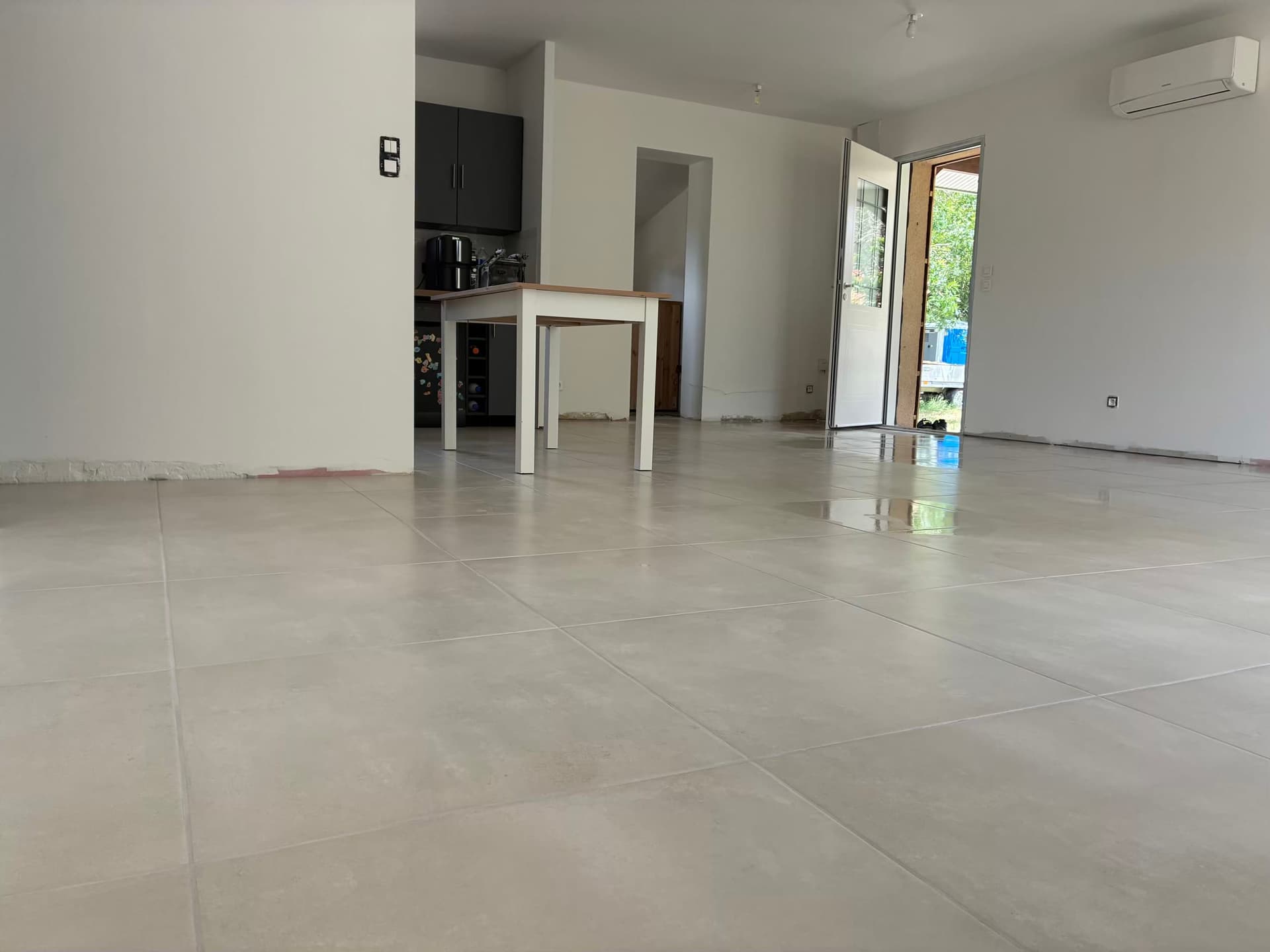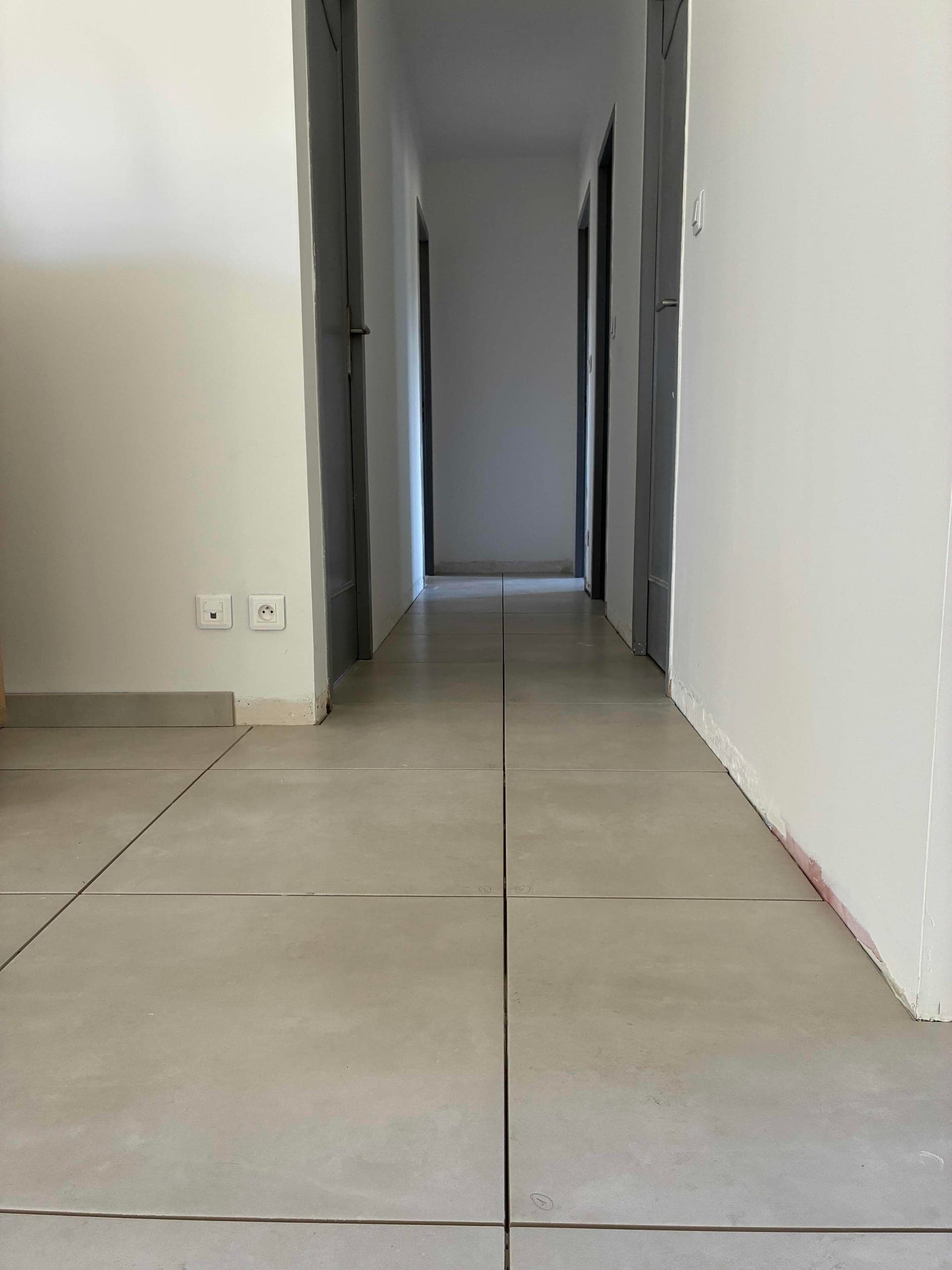
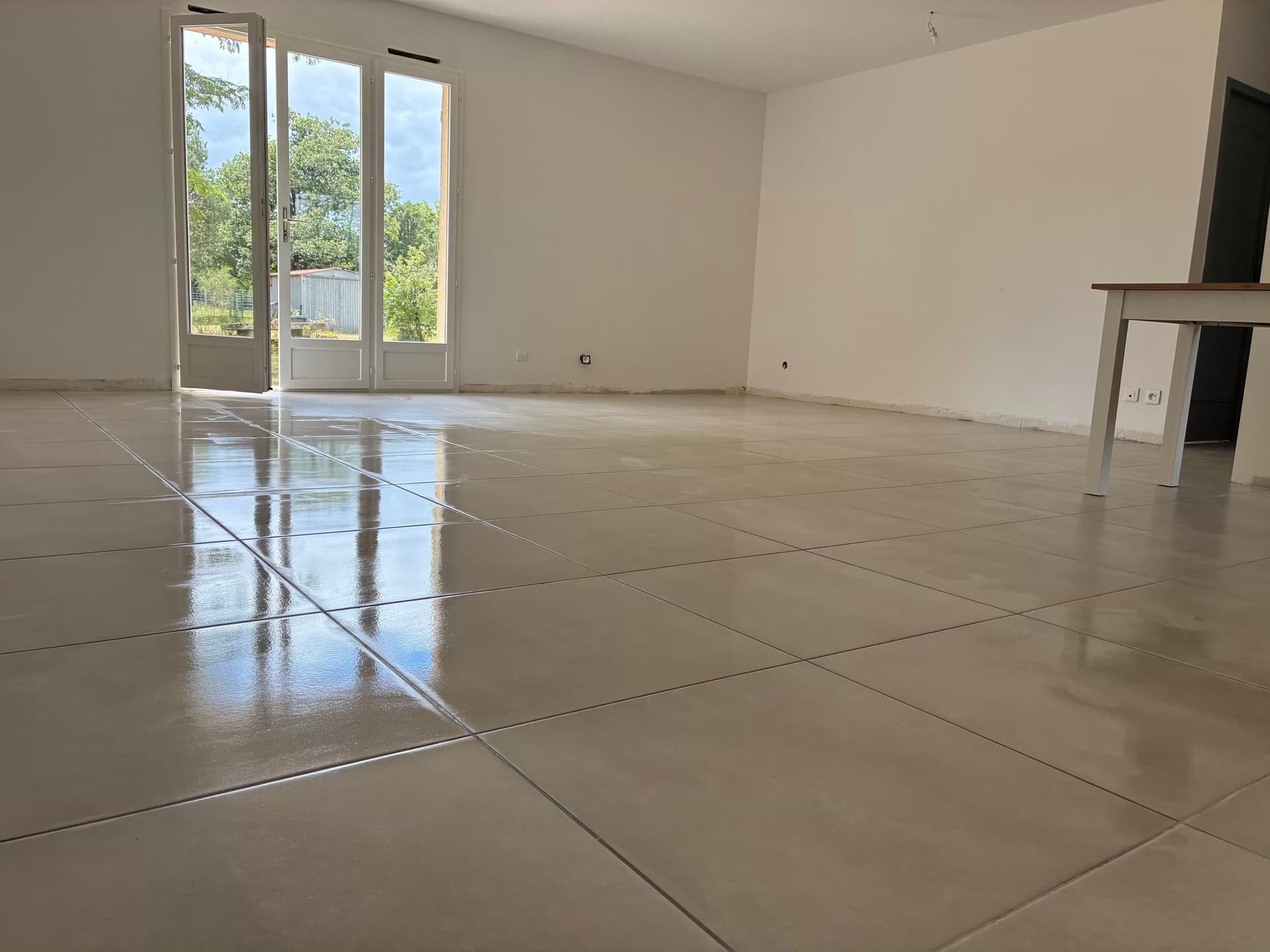
55 m² of concrete-effect porcelain stoneware in 60×60 laid across the living area, kitchen and hallway, with localised levelling of the substrate beforehand.
On this project in Belin-Béliet we laid 55 m² of large-format 60×60 porcelain stoneware in a concrete effect, across three connecting spaces: the living area, the kitchen and the hallway. A single floor throughout these rooms opens the space up and does away with thresholds — provided the setting out is planned as one piece from the start.
The substrate had localised differences in level, which large-format tiles do not tolerate. So we levelled it in patches: rather than screed all 55 m², we surveyed the flatness room by room and treated only the areas that fell outside tolerance.
What we did
- Flatness survey of the substrate and marking of the out-of-tolerance areas
- Bonding primer applied to the surfaces to be levelled
- Self-levelling compound applied only where it was needed
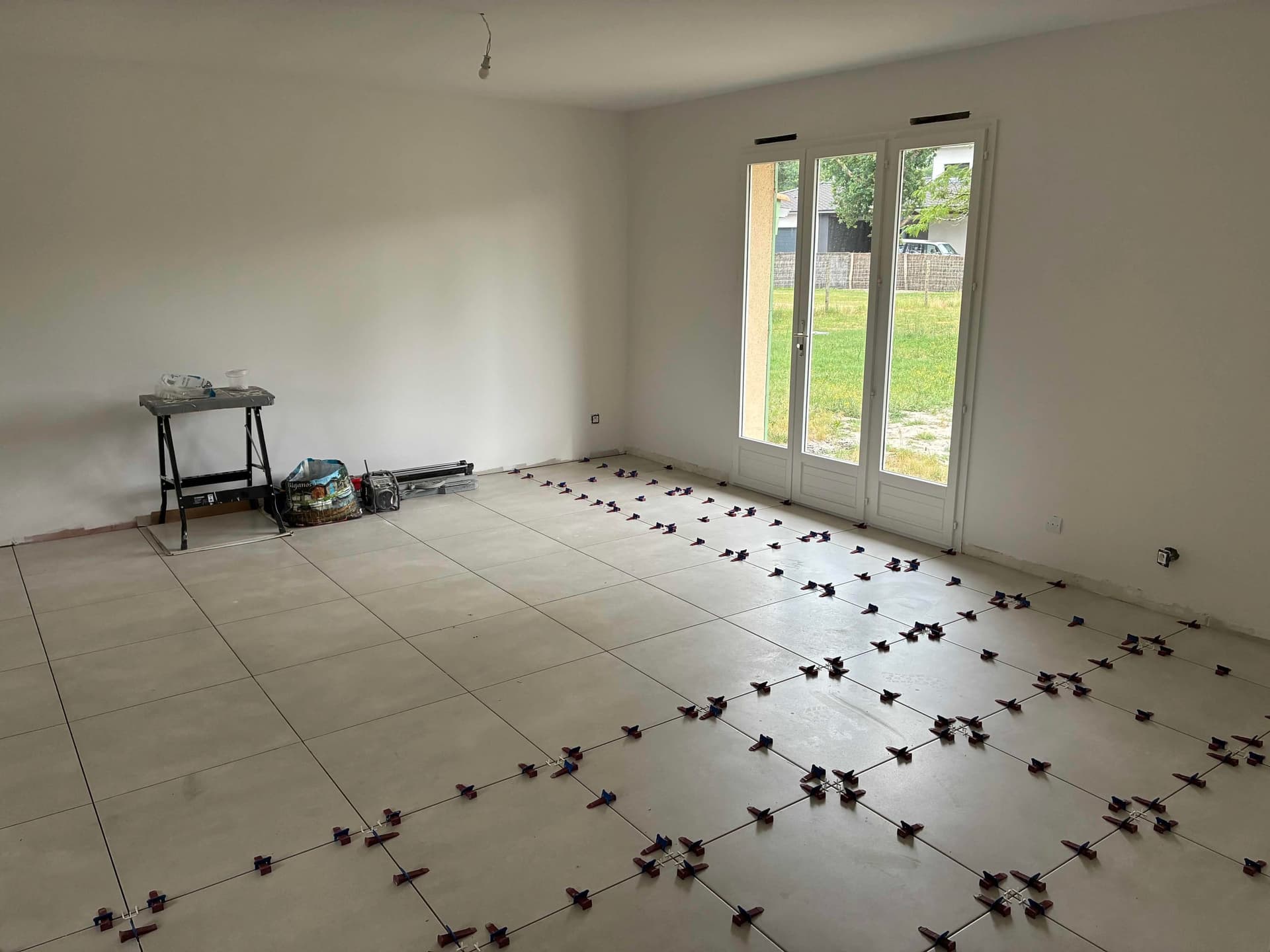
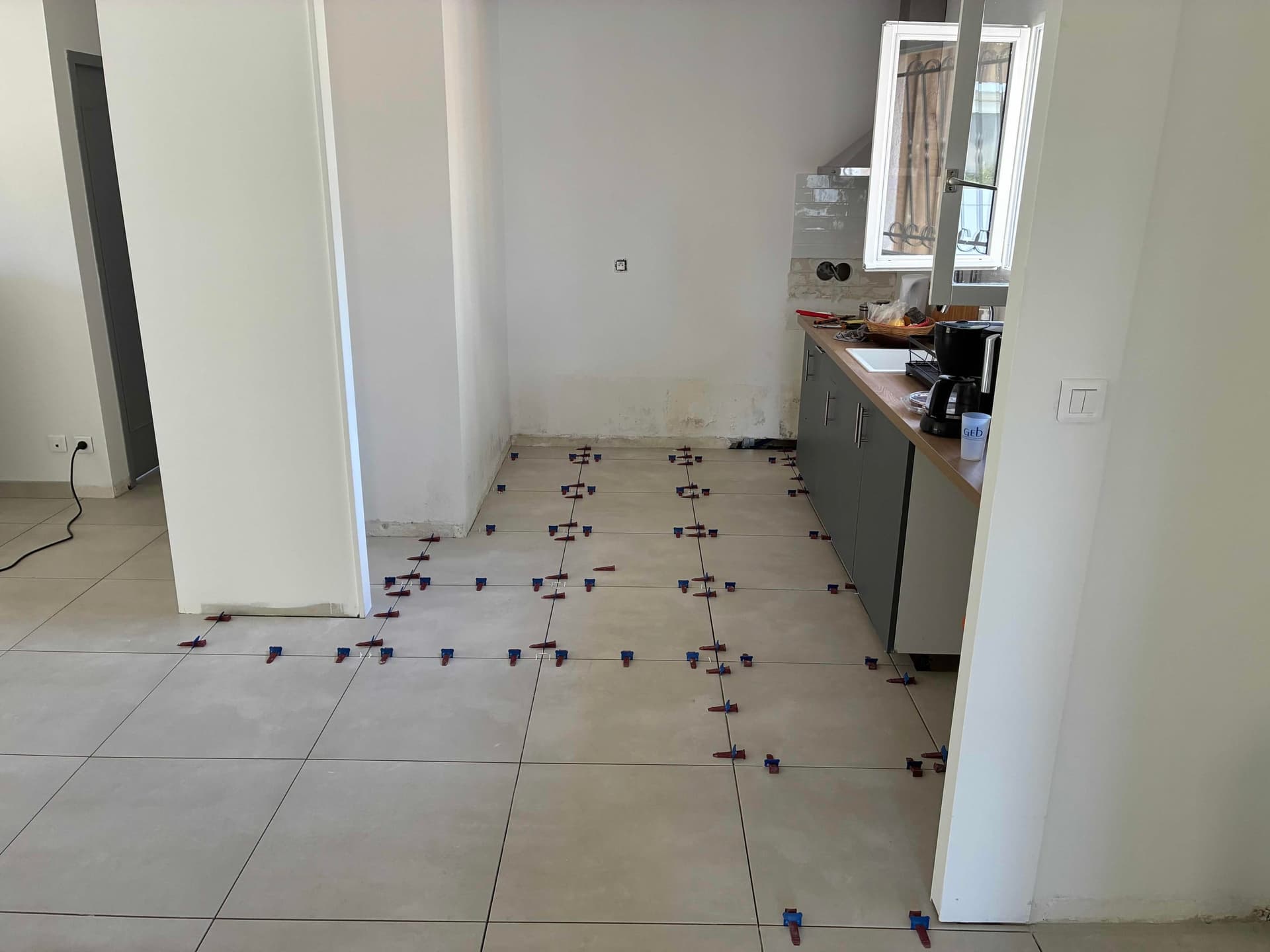
- Setting out established from the living area, to align the joints across all three spaces and push the cuts out of the most visible zones
- 60×60 concrete-effect porcelain fixed with the back-buttering method
- Levelling clips used to control lippage between tiles
- Grouting, plus movement joints at the thresholds
- Final clean and removal of the cement haze
Why level the floor before laying 60×60
The bigger the tile, the less it forgives a poor substrate. On a 30×30 format, a dip of a few millimetres can be taken up in the adhesive bed; on a 60×60, the tile does not flex and the defect shows up as lippage — one tile standing proud of its neighbour, obvious in raking light and unpleasant underfoot.
Levelling compound brings the substrate back within flatness tolerance before tiling starts. Patch levelling is the right answer when the defects are localised: you treat what needs treating, without paying to screed the rest of the floor.
Got a similar project? Request a free quote.